Latest Plumbing & Heating News

The Top 5 Plumbing Myths

Here at Zierman plumbing, we have over three generations of plumbing experience. We learned a long time ago how to avoid rookie mistakes. However, many homeowners are brand new to the plumbing world. They may try “tips and tricks” that they’ve heard, only to end up with a bigger problem. Here are the top five plumbing mistakes that we see homeowners making, and how to avoid them:

1. Put Lemons Down Your Garbage Disposal to Clean It

Many people have heard the plumbing folklore that lemons can freshen up a smelly garbage disposal. While lemons may smell great, they aren’t the best cleaning method. First, the tough lemon peel could potentially clog your drain.

Next, the harsh citric acid could corrode or damage your disposal and piping. Instead of lemons, try ice cubes to keep your blades sharp. If the smell is still sticking around, try mild soap and lots of water down your drain.

2. It’s OK to Flush X, Y, Z Down the Toilet

Plumbers agree that only human waste and toilet paper should ever be flushed down the toilet. Items like feminine products, wipes, expired prescriptions, or anything else will only clog your pipes or harm the sewage system.

Just because it flushed once doesn’t mean it won’t build up or clog your system another time. Plus, for some products, “flushable” just means that it can get past your toilet’s u-bend. That doesn’t mean it won’t get stuck later in your pipes, or that it will break down in water.

In fact, large deposits of wipes and products have already broken down several sewage systems. Be sure to throw away anything that doesn’t belong in the toilet bowl.

3. A Little Leak is No Big Deal

How much water could be lost through something as small as the occasional faucet drip? A lot of water, it turns out.

The average household can waste around 10,000 gallons of water each year just through leaks.

Check to make sure your faucets aren’t dripping, and that your toilet isn’t running after it’s flushed. If they are, you may be able to add some washers or tighten some screws to fix the problem.

If that doesn’t stop the leak, call your local plumber.

4. Plumbing Fixtures Can Be Left Alone For Months, Even Years

Many homeowners realize that they can’t leave a car untouched for a few months and expect it to run well.

Similarly, your fireplace or heater may need some cleaning and maintenance before starting it up again in winter.

However, most people expect a toilet or sink to always be ready to use. Then, they have an unpleasant surprise when trying to use a neglected guest room toilet.

Water in the pipe underneath your toilet, the p-trap, can evaporate and let sewage smells leak into your home.

Obstructions can also build over time, and problems like tree roots above your pipes can grow into huge expenses. Be sure to include occasional plumbing maintenance in your home routine.

5. All Plumbers are the Same

While any plumber needs a license, plumbers can opt out of further training.

Instead, our team of experts at Zierman continues to take new training classes, earn new certifications, and learn about the newest plumbing technology.

Be sure to choose a plumber with a proper license, one that’s certified with the Better Business Bureau, and one who knows about the latest, most efficient methods.

Hiring the right plumber can save you problems down the line, and can also keep you from getting scammed or taken advantage of.

Call Zierman today for your plumbing maintenance, installation, or repair needs.

How to Clear a Clogged Drain: It Could Be the P-Trap

One of the most common reasons for a clogged drain is a clogged p-trap.

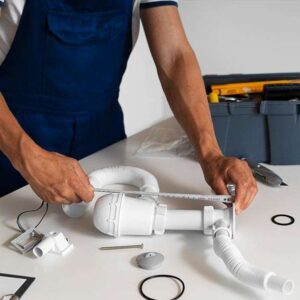
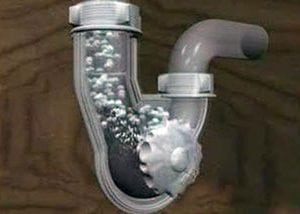
The p-trap is the u-shaped pipe underneath your bathroom or kitchen sink, and it creates a constant barrier of water in your pipes.

This is a very useful thing to have, as it prevents sewer smells from coming up through the pipes, and also helps prevent anything from crawling up your drain.

However, if hair or other buildup gets stuck there, it can prevent your pipes from draining properly.

Thankfully, clearing a drain by replacing or cleaning the p-trap is relatively easy fix in the world of DIY plumbing.

If you’re interested in being plumber for a day and doing your own drain cleaning, then this is the project for you.

1. Get the Right Materials

You’re going to need a bucket to catch any leaking water, a pipe wrench or channel-lock pliers, and a new p-trap set if you plan on replacing it. You’ll also want gloves and a facemask if you expect mold or other sludge. It may seem obvious, but make sure your tap is off!

If you think that the tap may be accidentally turned on while you’re working, turn off the water valves under the sink as well.

2. Take Apart the P-Trap

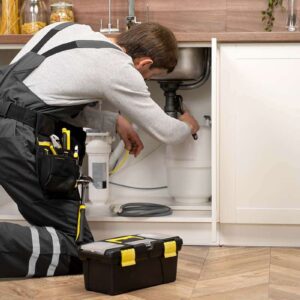
Make sure your bucket is underneath the p-trap, as water will naturally come out once you loosen the nuts.

Remove the u-shaped lower piece first by loosening the nuts on either side with your wrench or pliers. From there, you can unscrew them with your hands. Be gentle, especially if any of the pieces are plastic, because you don’t want to crack or break them.

Once you have the u-piece off, you can also remove the piping that connects to your sink as well as the pipe that connects to the wall.

The u-piece will be full of water, so carefully dump it into your bucket. If you’ve never installed a p-trap before, take a picture of the original set-up so that you know how to put it back together later.

3. Examine and Clean the P-Trap

If your piping is old, leaking, or corroding, you’ll need to completely replace the p-trap.

However, most of the time you can get away with simply cleaning it. Dig out any sludge, mold, hair, or debris.

Use a toothbrush or bottlebrush and some mild soap and water to completely clean out all pipes.

Check the piping in the wall and the sink to ensure those are also clean. If you’ve dropped something down the drain, such as jewelry, you can check the p-trap for your lost item as well.

4. Re-Install the P-Trap

Take your clean pieces and begin reinstalling it. If you needed a trap replacement, then start installing your brand new replacement parts.

First insert the piping for the trap arm and the pop-up drain (the pipes coming from the wall and the sink). Make sure you have your nut and your washer on each one, and loosely screw them in.

Then, line up your p-trap piping with the other two pipes, with a nut and washer on either end of the p-trap. Tighten everything up by hand.

From there, use your pliers or wrench to tighten it another quarter turn to make sure everything is completely tight. Don’t pull it too tight, as this could crack the piping.

5. Enjoy Your Handiwork!

Go ahead and run the tap for a few seconds, then run your hand over each part of the piping to make sure there aren’t any leaks.

Leaks could mean serious water damage under your sink, which means you’d have to call a plumbing company.

If there aren’t any leaks, you can probably assume that you did good work! Your drain should now run smoothly. If not, there may be a more serious blockage. In that case, call your local plumber.

If this doesn’t solve your problem, or if you notice water damage underneath your sink, it might be time to call your local plumber.

If you live near Santa Maria, call Zierman Plumbing today. We’ve been around since 1950, and can offer general check-ups as well as problem solving. We also offer 24/7 emergency services. We also offer several coupons on our website.

Call now to get your plumbing services fully operational!

Can My Old Heater Kill Me?

An old furnace can be a serious headache—both literally and figuratively. Older furnaces are unreliable and inefficient, meaning that they can eat up a lot more energy for the same amount of heating as a newer heater. More energy usage also means higher electric bills.

The United States Energy Department warns against using an old furnace, and even Time Magazine notes that installing a new energy efficient furnace can be a real money-saver.

However—even more importantly—with a continuous pilot light and a poor exhaust system, older HVAC systems can also be extremely dangerous.

According to the National Fire Protection Association, residential heating equipment is a leading cause of home fires in the United States, second only to cooking accidents. They also noted that the main factor in heating fires was simple: failure to properly clean and maintain the equipment as it got older.

Over 30,000 furnaces were recalled in 2001 because of the high fire risk that they posed. Old furnace filters can compromise your system, and any dust or buildup near the furnace could easily cause a fire.

The “Invisible Killer”

Another serious danger in old furnaces is the possibility of carbon monoxide poisoning.

As furnaces get older, the heat exchanger can rust or crack, leaking carbon monoxide. Old or clogged vents and chimneys can also cause carbon monoxide to leak into homes.

The United States Consumer Product Safety Commission (CPSC) clearly warns against the dangers of carbon monoxide poisoning and urges families to carefully inspect their heating systems.

Called the “invisible killer” by organizations like the Center for Disease Control and Prevention (CDC), carbon monoxide is impossible to detect with the naked eye.

It’s colorless and odorless, and symptoms can often be too subtle to immediately detect. At first, carbon monoxide poisoning causes common symptoms like headache, nausea, or fatigue. However, it also builds up in blood over time, and can ultimately lead to loss of motor control and death.

According to fire officials, an estimated 400-450 people die each year in the United States alone due to carbon monoxide poisoning.

So, What Can You Do About It?

If your furnace is nearing the end of its lifespan—usually around fifteen years—it’s time to replace.

Call Zierman Plumbing today, and we’ll be happy to work with you to find the best heating system that meets your home’s needs as well as your budget. However, if your system is relatively newer, it’s still important and safe to have your system evaluated and cleaned.

The CPSC recommends an annual HVAC service, at the very least. Our HVAC specialists are able to carefully inspect your system, remove any debris, ensure that the exhaust system is properly working, and inform you of any necessary repairs.

They also thoroughly clean your system, and make sure that it’s operating at the desired temperature.

Lower Your Energy Bills and Keep Your Family Safe

There’s no reason to continue to pay extra money on your energy bills because of an old system, and certainly no reason to put yourself, your family, and your home at risk for fire due to an old furnace, not to mention the dangers of carbon monoxide poisoning. Call Zierman today for a FREE estimate!

Small Business Saturday All Year

In this season, families all across the U.S. are shopping for gifts. Most people are familiar with Black Friday—but a new movement gaining popularity is Small Business Saturday, where shoppers intentionally buy from smaller businesses rather than large, nationally-owned corporations. Why might so many people be choosing to shop local?

Benefits to Shopping Local

There are several benefits to shopping local, according to many research groups. For example, Michigan State University, the Institute for Local Self-Reliance, the Business Alliance for Local Living Economies (BALLE), and more, all found that local businesses were much more beneficial to local economies than large corporations.

The 2010 MSU study found that local businesses keep money in the community by spending money on local marketing, business services, supplies, and more—whereas nationally owned corporations export all of these.

Time Magazine compared money in a local economy to blood: if it’s moving, that’s good—but if it’s only flowing out, that means you have a wound!

Local Businesses are Also More Reliable

Local businesses are also more reliable, meaning that they are less likely to leave their city or town for the promise of greater profit. This means greater job stability. In fact, that same MSU study showed that local businesses create two out of every three new jobs.

Local businesses have many incentives keeping them from packing up shop, especially their own families and community relationships.

They are actively invested in staying in and improving their communities, whereas larger corporations are primarily interested in making as much profit as possible.

Many large corporations may move to a town, take advantage of tax incentives, and then leave when things are less profitable—leaving behind a broken economy and hundreds of layoffs, not to mention large abandoned buildings and parking lots.

Local businesses aren’t about to move overseas in order to avoid taxes or new business regulations. In fact, a study quoted by BALLE showed that, when it comes to net jobs, nonlocal jobs in a town in Oregon were thirty-three times more expensive to the local community and economy than local jobs, largely because they were so likely to take tax incentives and then leave.

Better Customer Experience

Another benefit of local businesses is that they create a better customer experience by ensuring diversity in their products and preserving community character. When it comes to “Best Restaurants” in Santa Maria, CA, for example, you won’t see many large chains topping the list.

Local businesses add character and charm to any town, and showcase the diversity and interests of the unique residents. When traveling, why go the same stores and restaurants you can find anywhere instead of having a unique and interesting experience locally?

Large corporations can create homogeny, and can make fascinating fringe products or experiences go extinct.

Many smaller stores offer a better experience because of their community relationships. A small business owner is interested in getting to know his or her customers and building relationships in the community, and is also able to give knowledgeable local recommendations.

The average large corporation worker simply can’t do that.

Support Your Local Business

At Zierman Plumbing & Heating, for example, we know the benefits of being a smaller, local business because we are one. We know that when it comes to heater repair and maintenance, or heating and plumbing, there are many big-name options out there.

But if you’re in Santa Maria and are interested in continuing to see our unique community thrive, Zierman is your local option.

Whether you’re looking to repair your furnace or you just need a plumber, Zierman is happy to help. Don’t let Small Business Saturday be just once a year — call Zierman today to support your local business!

Inspect Your Heater Before Winter Hits

Winter is the perfect time to curl up, watch a family movie, and drink something warm in your cozy home. But what happens when your home isn’t cozy at all, but instead is much too chilly? If your heater isn’t in working order, a warm night at home can quickly become unbearable. Proper heater repair and maintenance is essential, especially before the winter season hits.

If your heater has been sitting idle for almost a year, it’s important to make sure that it works properly before you really need it. Servicing your heating system once a year can ensure that your winter nights stay warm. Professional heating services—or in Zierman’s case, professional heating and plumbing services—are specially trained in how to keep your heater at peak performance.

What might a heating specialist do to improve your system?

They thoroughly inspect everything, from air filters to thermostats to blower shafts. Just like you wouldn’t ever let your sink or car or fridge go a year without cleaning and maintenance, it’s important to never let your heater go a full year without an inspection. After all, when you use your heater for the first time in a while, you don’t want it blowing dust and dirt into your home!

Heating specialists will make sure your furnace is in optimal condition

Heating specialists will examine your furnace inside and out for any necessary cleaning or repairs. They evaluate the motor and fan belt, examine drain lines, and check the blower for dust or debris.

They also check your ductwork for any cracks and leaks, pay attention to any unusual noise or odors, and make sure your heating unit isn’t vibrating or shaking too heavily.

An expert in heating repair and maintenance is always sure to check that the thermostat is turning on and off at the correct temperature, and they also evaluate any electrical connections.

Heating repair and maintenance for your safety

Up to 75% of reported heater failure in the winter is simply due to a lack of maintenance. Heating repair and maintenance is not only an issue of making sure that you and your family are warm in the winter, but it’s also an issue of safety.

Heating experts check for carbon monoxide leaks, any harmful substances in your ductwork, and change any air filters so that you can be sure that you’re breathing in clean air.

Faulty heating systems can also increase your monthly energy bills, because the heater is working much harder to try reach the desired temperature. Dirty air filters, an improperly lubricated motor, or obstructed blowers can all prevent your system from being as efficient and functional as it is meant to be.

Don’t be left in the cold this winter. Be sure to inspect your system now, while you still have time to make any necessary repairs before you really need to use it. No one wants to pay extra on their electric bills, put themselves at risk, or have undesirable odors filling their home.

A heating inspection and cleaning can prevent these issues now, before they become urgent.

We Can See Inside Your Pipes

Have you ever wondered what the inside of your plumbing looks like? Have you ever been curious about where all of your water goes or how your pipes get blocked?

With new technology, Zierman plumbing can now see inside your pipes.

New waterproof cameras, specially designed to be lowered through piping, can offer us never-before-seen visual inspections of plumbing systems.

These cameras, attached to flexible rods, can maneuver around corners and even through pipes as narrow as two inches across. These images are viewed in real-time, and can be saved for later examination or for insurance purposes.

The potential benefits of these new cameras are several. First, they have revolutionized the way that plumbers identify blockages.

Previously, there really wasn’t a way to be sure what the cause of your blockage might be. Plumbers like Zierman would be able to push out the blockage into the sewer lines but weren’t able to enter the pipes and positively identify the issue.

If the blockage was a one-time problem like a foreign object in the pipe, this wasn’t a problem.

But if the blockage was reoccurring, like pipe damage or roots entering the pipes, a plumber might not realize it until the third or fourth visit.

These cameras are also very beneficial when it comes to pipe examination. Before, if your pipe was damaged or old, we would have to excavate your entire pipeline in order to discover which areas needed to be replaced.

Now, you save huge amounts of time and money on sewer line repair through video inspections.

The camera can immediately identify which pipes truly need replacement and which don’t, meaning that we only have to excavate specific points instead of your whole front yard.

Further, a video sewer inspection can reveal problems that would otherwise take multiple visits to confirm.

For example, it’s very common for roots to go so deep into the ground that they start burrowing into your piping.

A video inspection will be able to distinguish a root blockage from a regular blockage, and can therefore help plumbers know which procedures are necessary.

Our video inspections are also very useful when it comes to finding lost items. Until now, there really wasn’t a way to look through pipes and see if a lost item was still in the pipe or if it had been washed away into the sewer mainline.

If you’ve dropped jewelry or an important item down the drain, a video inspection can travel through your pipes to see if it’s possible to retrieve it.

Finally, video inspections can save time and money. Instead of digging up your pipes, visiting again and again and working on your pipes with trial and error, or aimlessly fishing for a lost item—these video inspections can provide your answer right away, with zero guesswork.

They can eliminate the need for costly repairs by identifying exact problems, and are extremely useful when it comes to inspecting your entire sewer line.

Further, these inspections can be used before remodeling or buying a home to ensure that you won’t have a plumbing problem dropped in your lap down the line.

Warning Signs Your Sewer Pipe May Need Replacement

Just as your body develops wear and tear as it ages, so does the plumbing in your home. And as with your physical health, where seemingly minor symptoms sometimes indicate that there is a serious problem brewing, so too with plumbing, where what may seem insignificant or unrelated issues can actually reveal something more serious beneath the surface – a sewer pipe that’s ready for life support.

The sewer line has an important – but unsavory – job transporting water and waste from your toilets, sinks, and tubs to the city’s sewer main line, which is probably underneath the road in front of your home. Like any pipe, sewer lines are prone to corrosion, rust and slow leaks over time. And believe it or not, one of the most common causes of sewer pipe breakdown is invasive or crushing tree roots. After all, trees need water and your plumbing system is a handy source. Other causes are buildup of toilet paper, hair, feminine hygiene products, sludge, and grease inside the pipes. Finally, earthquakes or other ground movement, such as repeated freezes and thaws, can wreak havoc on your pipes. Whatever the cause, sewer pipe problems are especially common in older homes; chances are good that if your house was built prior to 1970, it’s ready for a sewer pipe redo.

Some of the most common “symptoms” of a sewer pipe in ill health include:

  • Frequent clogs in the toilets.
  • Slow draining tubs and sinks.
  • Sewage or dirty water backing up into your tub or sink.
  • Gurgling, clanking, or burbling sounds coming out of the toilet after it’s flushed.
  • Sewage smells or bad odors inside or outside your home.
  • Standing water or soggy patches in your front lawn or garden.
  • Toilet water levels that change from flush to flush: sometimes normal, sometimes not.
  • Any combination of multiple plumbing problems given above.

If it’s time for sewer pipe “surgery,” don’t assume you’re doomed to large trenches ruining the appearance of your lawn and front garden. Very often, a simple re-lining of the sewer pipe will fix your plumbing problems. In this procedure, the pipe is first cleaned and unclogged. Then, a resin-coated tube is threaded into the pipe and inflated, pressing the resin against the pipe walls. Within a few hours, the resin is hard and the tube is removed. Voila, clogs and leaks are a thing of the past, and your precious landscaping is still intact.

If you are seeing the symptoms of sewer pipe trouble in your home, give us a call today.

How to Keep Your Plumbing System in Tip-Top Shape

While it might not require the level of maintenance your lawn demands, for example, your home’s plumbing system DOES require a bit of attention throughout the year if you want to avoid a costly, destructive or potentially embarrassing situation – overflowing toilet in the middle of Thanksgiving dinner, anyone? While major plumbing issues call for a professional, the simple tips given here are a good way to prevent future trouble.

Watch Your Drains

One of the most common plumbing problems is a slow or completely clogged drain, and almost always, the cause is a pipe filled with food scraps, hair, grease or other grungies that shouldn’t have been going down the drain to begin with. Use a strainer over your kitchen sink drain, a hair trap in the shower, and collect cooking grease, fat and oil in a coffee can to be disposed of when full.

Look for Leaks

The last thing you want is a slow leak that’s undiscovered until it causes extensive water damage. Make it a weekly habit to check pipes underneath the sink, in the garage, at the hot water heater, behind the washing machine and dishwasher, and around the garden hose for any signs of leaks. Replace cracked or worn plumbing parts right away if you notice unusual moisture or leaking water.

Maintain Your Water Heater

If unnoticed, a leaky water heater can progress to a flood across your garage or closet floor. To help control the sediment that leads to water heater failure, drain out a gallon or two of water from the appliance each season.

Check the Water Pressure

The water pressure in your home should ideally be between 40 and 85 psi. Much above that range is like high blood pressure for your plumbing, creating too much strain on pipes, faucets and fittings, and greatly increasing the likelihood of a leak or a burst pipe. You’ll find inexpensive gauges for checking water pressure at home improvement centers.

Be Careful with Caustic Chemicals

It might be tempting to pour that bottle of caustic drain cleaner down your sink or toilet whenever things start running slowly, but watch out. Most such products slowly eat away at your pipes, and can eventually lead to a leak – a worse problem than the original clog. Instead, learn the correct use of a plunger to remove a simple clog, or call for a professional plumber if it’s a stubborn or recurring problem.

Toughen Up Appliance Hoses

The soft rubber hose that’s common to most dishwashers or washing machines is a leak – or even worse, complete explosion – waiting to happen. Replace such hoses with stainless steel braided hoses. You’ll find them at home improvement centers.

Where’s the Water Main?

In the unhappy event a plumbing problem strikes, you need to know how to turn off the water. That means being familiar not only with the valves serving each toilet and sink in your home, but also knowing where to find the water main serving the entire house. It’s a good idea to inspect this valve seasonally. Make sure it’s not rusted or frozen in position and there are no signs of leaks or excessive wear. And if you’re going away on an extended vacation, consider shutting the water off to prevent any unpleasant surprises upon your return.

Why Choose a Tankless Water Heater?

Unless your shower turns cold halfway through your shampoo, you probably rarely think about your home’s hot water supply. But if it’s time to replace your hot water heater, then it’s time to consider the benefits of a tankless water heater (also called “on-demand” water heaters) over the traditional large-tank design.

Energy Conservation: The #1 benefit of a tankless water heater is a reduced utility bill — up to 35% annual savings on your electricity, propane or natural gas bill. That’s because unlike traditional water heaters, which constantly draw energy to keep the large tank of water warm and ready, on-demand units do just that; they heat up water only when there is a demand – in other words, only when you run your hot water tap, shower or hot-water appliance.

Less Space: A traditional tank unit is quite large – typically around 5’ high and 2’ wide. That means it takes up a lot of room in your home or garage. By contrast, tankless water heaters are very compact and generally mount right on the wall. Depending on your requirements, an on-demand heater might be as small as 2’ wide, 2’ tall and a mere 9” deep.

This means you can position the unit closer to where it’s needed, cutting down on the distance hot water has to travel through your home’s plumbing, and thus cutting down on your wait for the water to heat up.

Endless Hot Water: With an on-demand water heater, there’s no need to dread a cold shower when the hot water runs out. Tankless water heaters continue to heat the water supply for as long as you are using it, so you’ll enjoy warm water until you’re done.

Long Life: With no tank of stored water, on-demand units aren’t subject to the inevitable leaks or rusted-out bottoms that plague traditional hot water heaters. Because of this, you can expect your tankless heater to last up to 20 years – double the life expectancy of a traditional unit.

With such strong pluses, you might wonder if there are any downsides to choosing a tankless water heater. Yes, admittedly there are. A few of the cons include:

* Tankless water heaters are more expensive than traditional units at initial purchase

* Depending on the unit, installation can be complex

* If the tankless heater isn’t large enough, it might not be able to supply hot water simultaneously to different areas of the home – for example, running the dishwasher while you’re washing up at the bathroom sink.

Choosing the right water heater for your home doesn’t have to be a struggle.

Give us a call. We can help you make the best decision, and then install your new water heater the way it should be done: right.

How to Retrieve Items from a Drain

Oh no! You set your rings on the bathroom counter while you were washing your hands, but accidentally knocked one into the sink and it went down the drain!
Or maybe your toddler thought it was fun to watch a small toy soldier “go on an adventure” down the kitchen sink.

The potential scenarios are almost endless, but whatever your item that has journeyed into the watery depths of the household plumbing, there is a good chance you can retrieve it yourself with a little know-how and a couple of basic tools. Here’s what to do.

First, if the water is running in the sink, immediately turn it off.

Next, with the aid of a flashlight, look down inside the drain to see if you can spot the object. If you’re lucky, it’s not far down the pipe and you can pull it out with a long tweezer, grabber or even a hanger bent into a loop.

If you can’t see the item, however, you’ll need to switch into DIY plumber mode.

1. Take a look underneath the sink. You’ll see that the plumbing extends straight down, but then curves back upward into a “U” shape. The bottom curve of that U is the P-trap, and most likely, your lost item is sitting inside it.

2. Set a bucket underneath the P-trap before going any further.

3. Now you’ll need to loosen the slip nuts that hold the P-trap in place. In many homes, they are made of plastic and you’ll be able to loosen them by hand. If not, you’ll need to use an adjustable wrench to loosen them. (Remember, “Lefty loosey, righty tighty.”)

4. Carefully remove the P-trap. Be prepared for water and gunk to drain into the bucket. Hopefully, your lost item will fall out as well.

5. After retrieving your jewelry or other item, wipe any build-up of grunge out of the pipe, and then place it back into its proper position.

6. Re-tighten the slip nuts, and then turn the water supply back on.

7. Before removing the bucket, make sure there are no leaks underneath the sink.

Generally, this entire procedure is a simple one, but if you are unable to retrieve your lost item, or your plumbing situation is more complicated than the typical home setup, it’s time to call a plumbing professional.

Scroll to top