 Zierman Plumbing
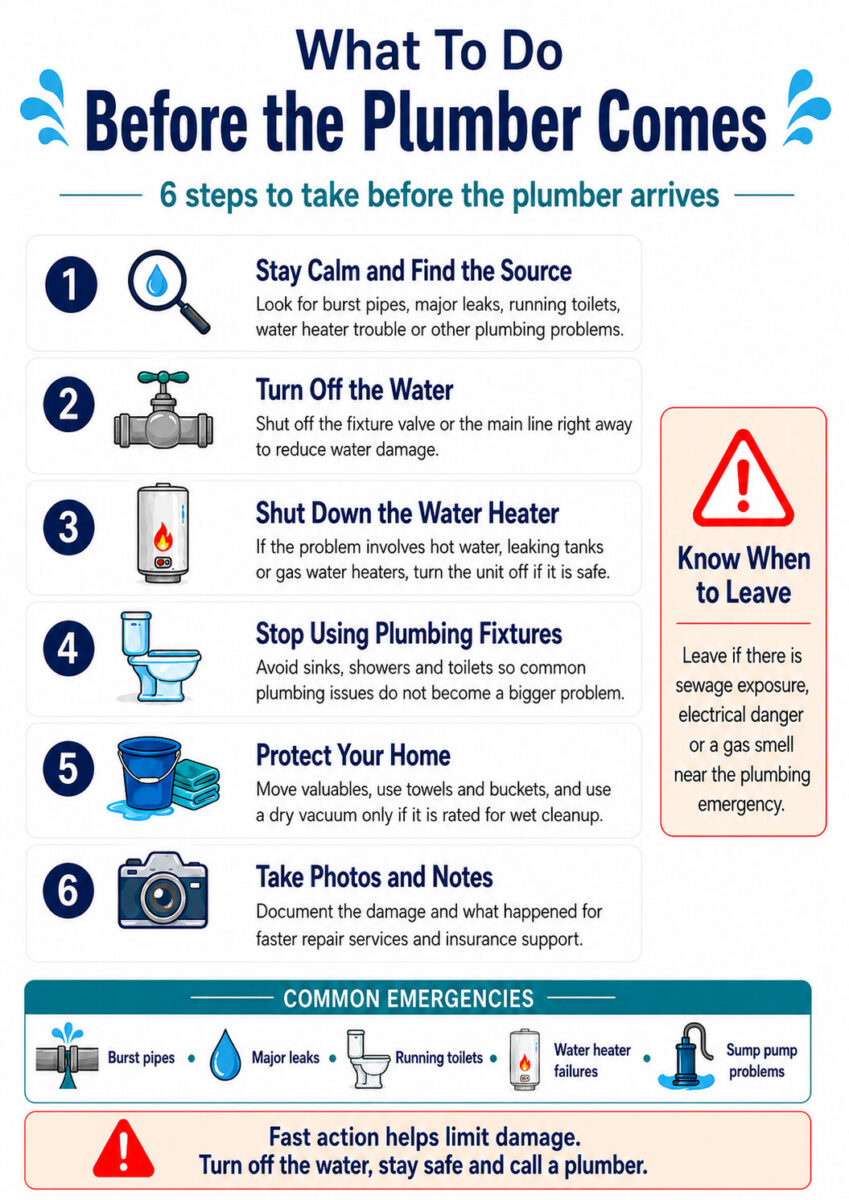
1. Stay Calm and Find the Source of the Problem
First, take a breath. Most plumbing issues feel worse when water is spreading or fixtures are backing up. A calm look around can help you act faster.
Try to identify where the water is coming from. Common signs include:
- Water pooling near sinks, toilets or appliances
- Wet flooring near walls or cabinets
- Water dripping from ceilings
- No hot water from your water heater
- Sewage odors near drains
Some common plumbing emergencies are obvious, like burst pipes or major leaks. Others may point to a bigger problem hidden inside your plumbing system.
Do not try to take apart pipes or fixtures during an active emergency. Your goal is to limit damage until professional plumbing help arrives.
2. Turn Off the Water Right Away
Next, turn off the water. This is often the most important step you can take.
For a single fixture, use the shutoff valve near the problem area. Toilets usually have a valve behind the base. Sinks often have valves under the cabinet. Appliances may have shutoffs nearby.
For larger emergencies, use the main water shutoff valve. This can stop water from feeding the whole house.
Turn the valve clockwise until it stops. Then open a nearby faucet to release pressure from the line.
If you are dealing with burst pipes, major leaks or fast-spreading water, do not wait. Shut off the main supply first. You can always restore water later once the problem is safe.
3. Shut Off the Water Heater if Needed
If your emergency involves your water heater, take extra care. Leaks from tank-style units can release a lot of water. They can also affect electrical or gas connections.
For electric water heaters, switch off the breaker. For gas water heaters, turn the gas control valve to the off position if you can reach it safely.
Do not touch standing water near electrical panels, outlets or appliances. Leave the area and wait for help.
If you have gas water heaters, leave the home and call for emergency help if you smell gas. Do not use lights, matches or electronics nearby.
Loss of hot water may not always be dangerous. But a leaking tank, strange noises or water around the unit can become serious quickly.
4. Stop Using Fixtures and Drains
Once water is off, stop using plumbing fixtures. Do not flush toilets, run sinks, take showers or use the washing machine.
Running toilets can waste water and make leaks worse. If a toilet is overflowing, remove the tank lid and lift the float or flapper. Then turn off the small valve behind the toilet.
If drains are backing up, avoid using any nearby fixtures. Water from one drain can rise in another if the sewer line is blocked.
Do not use chemical drain cleaners during an emergency. They can damage pipes and create hazards for the plumber.
5. Move Items Away From Water
Now protect your home and belongings. Move furniture, rugs, boxes and electronics away from wet areas.
Use towels, buckets or containers to catch dripping water. If water is coming through the ceiling, place a bucket below it. Keep people and pets away from the area.
For standing water, use a mop, towels or a dry vacuum designed for wet cleanup. A standard household vacuum is not safe for water. Only use a dry vacuum if it is rated for wet use.
This step helps reduce water damage while you wait for repair services.
6. Take Photos and Notes
Before cleanup goes too far, take pictures or short videos. Capture the leak, damaged areas and anything affected by water.
This can help with insurance claims. It also helps the plumber understand what happened before they arrived.
Write down when the issue started, what you noticed first and what you already did. Simple notes can save time.
For example, tell the plumber, “I turned off the water at 8:15 AM,” or “The toilet started overflowing after the shower drained.”
7. Call Zierman Plumbing
The more details you provide, the better we can prepare.
Once the situation is stable, call for professional plumbing help. Emergency services are important when water is spreading or a fixture is out of commission.
Tell our dispatcher what happened. Mention whether you shut off the main water supply. Also share whether the issue involves your water heater, sump pumps, running toilets, sewer backups or major leaks.
8. Avoid DIY Repairs That Could Make Things Worse
It may be tempting to patch a pipe, remove a fixture or restart equipment. In most emergencies, it is better to wait.
Temporary actions, like placing a bucket or shutting off valves, are helpful. But deeper repairs should be handled by trained technicians.
Plumbing problems can involve pressure, gas lines, sewer waste or electrical risks. A small mistake can increase repair costs or cause more damage.
If your home has sump pumps, do not unplug or reset equipment repeatedly unless instructed. The pump may be protecting your basement or crawl space from flooding.
9. Keep the Area Clear for the Plumber
Before the plumber arrives, clear a path to the problem area. Move storage, furniture or cleaning supplies if it is safe.
Keep children and pets away from work zones. Make sure the technician can access shutoff valves, the water heater, crawl space or garage.
This helps repair services begin quickly.
10. Know When to Leave the Home
Homes can be rebuilt, but your safety matters most.
Leave immediately if you notice sewage exposure, electrical hazards, structural ceiling damage or gas smells (especially near gas water heaters).
Final Step: Get the Problem Fixed the Right Way
A plumbing emergency is stressful, but quick action can limit damage. Turn off the water, protect your home and call a professional.
Zierman Plumbing & Heating provides emergency services for homeowners facing leaks, water heater problems, burst pipes and other urgent plumbing issues. When you need calm, experienced help, call Zierman and consider it done.